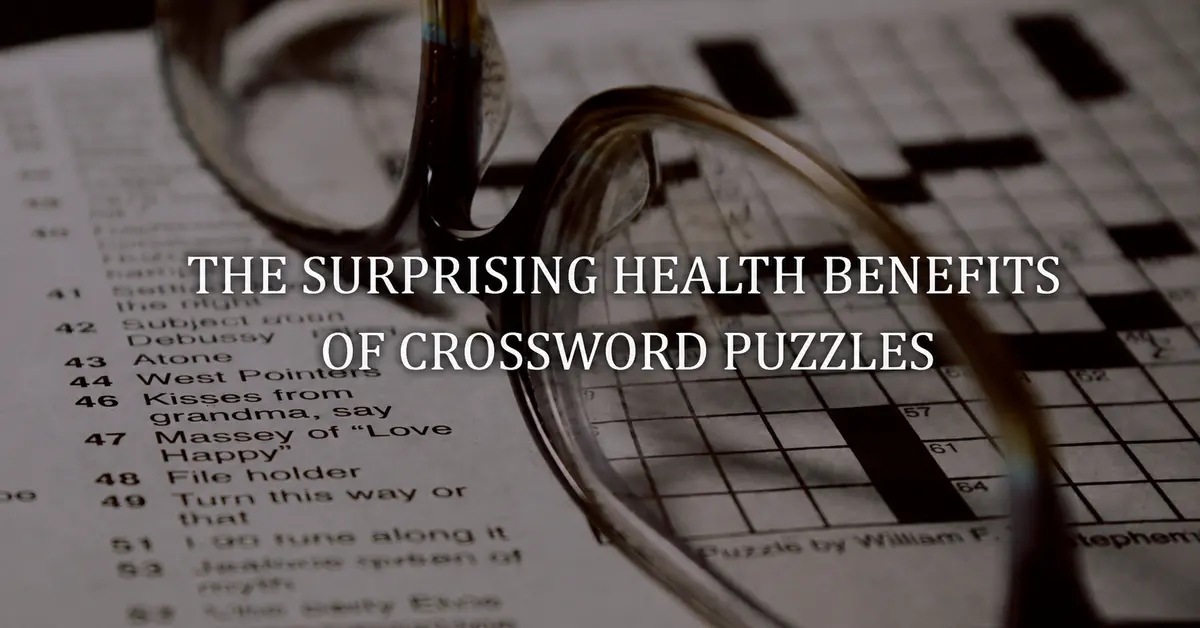
Benefits of crossword puzzles: brain, memory, stress, and connections
Crossword puzzles are often seen as a pleasant pastime for travel, relaxation, or a Sunday afternoon. But the benefits of crossword puzzles go far beyond simply passing the time. They engage memory, language, attention, and logical thinking, and when solved in a group, they can also create a sense of community. However, it is important to be precise: crossword puzzles are not a treatment and do not guarantee protection against dementia, but they are an accessible habit with potential cognitive, emotional, and social benefits.
What crossword puzzles are as a mental exercise
Short answer: Crossword puzzles are language-and-logic puzzles that activate memory, vocabulary, attention, and associative thinking. They are useful because they combine recall, pattern recognition, and hypothesis testing in a short, easily repeatable format.
When solving a crossword puzzle, the brain does not “work” only with words. It compares answer length, checks letters, recognizes synonyms, retrieves memories, and assesses whether a given answer fits the context. This makes the task richer than simply reading a list of words.
What is especially valuable is the combination of language memory and executive functions. A person has to hold the clue in mind, try an option, correct it, and continue. That is why crossword puzzles are a good example of low-risk mental exercise: they are inexpensive, portable, and can be adapted by difficulty level.
Benefits of crossword puzzles for the brain and memory
The strongest potential benefits are related to maintaining vocabulary, training recall, and improving mental flexibility. Research does not prove miraculous protection, but it supports the idea that regular cognitive activities are part of a healthier brain routine.
A study by Columbia University and Duke University, published in NEJM Evidence, compared computerized crossword puzzles with cognitive games in older adults with mild cognitive impairment. Over 78 weeks, the crossword puzzle group showed better cognitive results than the games group, although the authors emphasized the need for further research.
In practical terms, this means crossword puzzles are especially useful when they are moderately difficult. If they are too easy, the effect is weak. If they are too hard, the person gives up. The best choice is a level where around 70-80% of the answers are achievable, while the rest require effort, vocabulary, or help.
Crossword puzzles against dementia and Alzheimer’s: what science says
Crossword puzzles cannot be presented as guaranteed prevention against dementia or Alzheimer’s. However, data show a link between mentally stimulating activities and better cognitive resilience, including delayed symptom onset in some groups.
A study associated with UC Berkeley and cited by the National Institute on Aging reports that people without Alzheimer’s symptoms who had engaged in more cognitively stimulating activities throughout life showed fewer beta-amyloid deposits in the brain. This does not prove that crossword puzzles alone prevent disease, but it supports the idea of cognitive reserve.
Another study from the Bronx Aging Study followed older adults and found that participation in crossword puzzles was associated with a delay in accelerated memory decline of about 2.54 years among people who later developed dementia. The key word here is “associated”: observational data are not the same as a proven cause-and-effect relationship.
How crossword puzzles help with stress
Short answer: Crossword puzzles can reduce the feeling of tension because they direct attention toward a specific, limited task. This interrupts the cycle of anxious thinking and creates a sense of order, control, and a small victory.
When a person solves a crossword puzzle, attention shifts from everyday worries to a clear task: clue, number of letters, possible answer. This structure matters. Unlike endless scrolling, the puzzle has a beginning, progress, and an end.
The emotional benefit also comes from the sense of completion. Filling in the final word brings a small but real reward. For people with a stressful day, this can act as a brief mental pause, especially when the activity is screen-free and without competitive pressure.
Social benefits: why solving puzzles in a group is even stronger
Solving crossword puzzles with another person adds conversation, laughter, debate, and shared achievement. This turns the puzzle from an individual exercise into a social activity that can reduce loneliness and strengthen relationships.
The social aspect is not a minor detail. The CDC notes that social isolation and loneliness are linked to a higher risk of serious mental and physical health problems. The NIH also connects loneliness in older adults with risks such as cognitive decline, depression, and cardiovascular problems.
A crossword puzzle in a group creates a natural reason to communicate. One person knows an old word, another remembers geography, a third thinks of an actor or literary character. This makes the activity suitable for families, senior clubs, community centers, and intergenerational gatherings.
How to turn crossword puzzles into a useful habit
The best approach is short, regular practice: 10-20 minutes, several times a week. The benefit is greater when crossword puzzles are combined with reading, movement, sleep, social contact, and a variety of mental challenges.
The World Health Organization views the risk of cognitive decline and dementia as multifactorial, not as something influenced by a single habit alone. Physical activity, management of vascular risks, healthy eating, social activity, and mental stimulation are all part of the bigger picture.
| Goal | Approach | Example |
|---|---|---|
| Memory | Repeated practice | 15 minutes in the morning |
| Vocabulary | More difficult crossword puzzles | Themed puzzles |
| Social contact | Solving with another person | Sunday crossword puzzle |
| Stress | Calm routine | Evening without a phone |
It is a good idea to alternate different formats: classic crossword puzzles, Scandinavian-style crossword puzzles, Sudoku, reading, chess, and language learning. Variety reduces boredom and trains more skills.
Risks, mistakes, and when to seek a specialist
The most common mistake is expecting too much from one habit. Crossword puzzles can be a useful way to stay mentally active, but they are not a substitute for medical evaluation when memory, thinking, mood, behavior, or daily functioning begins to change.
If someone starts forgetting familiar routes, bills, medications, appointments, the names of loved ones, or important responsibilities, crossword puzzles are not enough. The right next step is to speak with a primary care doctor, neurologist, geriatrician, psychiatrist, or memory clinic. The CDC explains that dementia warning signs can include changes in memory, attention, communication, judgment, problem solving, and visual perception, especially when they affect daily life. Some causes of memory problems can be treated, and when dementia is involved, an earlier diagnosis gives families more time to plan care, treatment, finances, safety, and support.
This matters globally. The World Health Organization reported that 57 million people were living with dementia worldwide in 2021, with nearly 10 million new cases each year. In the United States, the Alzheimer’s Association estimates that 7.4 million Americans age 65 and older are living with clinical Alzheimer’s dementia in 2026 – about 1 in 9 people in that age group. These numbers make one point clear: brain games may be helpful as part of a healthy routine, but persistent or worsening memory problems deserve medical attention.
Conclusion: what to remember
Crossword puzzles are an easy, inexpensive, and enjoyable way to stimulate the mind. They are not a medical guarantee, but they can support memory, attention, mood, and social contact, especially when they are part of a more balanced lifestyle.
The most important thing is to take a realistic approach. Crossword puzzles are powerful as a habit, not as a miracle. They work best when solved regularly, at a moderate difficulty level, and sometimes with other people.
- Solve crossword puzzles for 10-20 minutes several times a week.
- Choose a level that is challenging but not discouraging.
- Combine them with reading, movement, sleep, and social meetings.
- In case of real memory problems, seek medical evaluation.
- For older adults, try group solving at home, in a club, or at a community center.

latest video

news via inbox
Nulla turp dis cursus. Integer liberos euismod pretium faucibua