
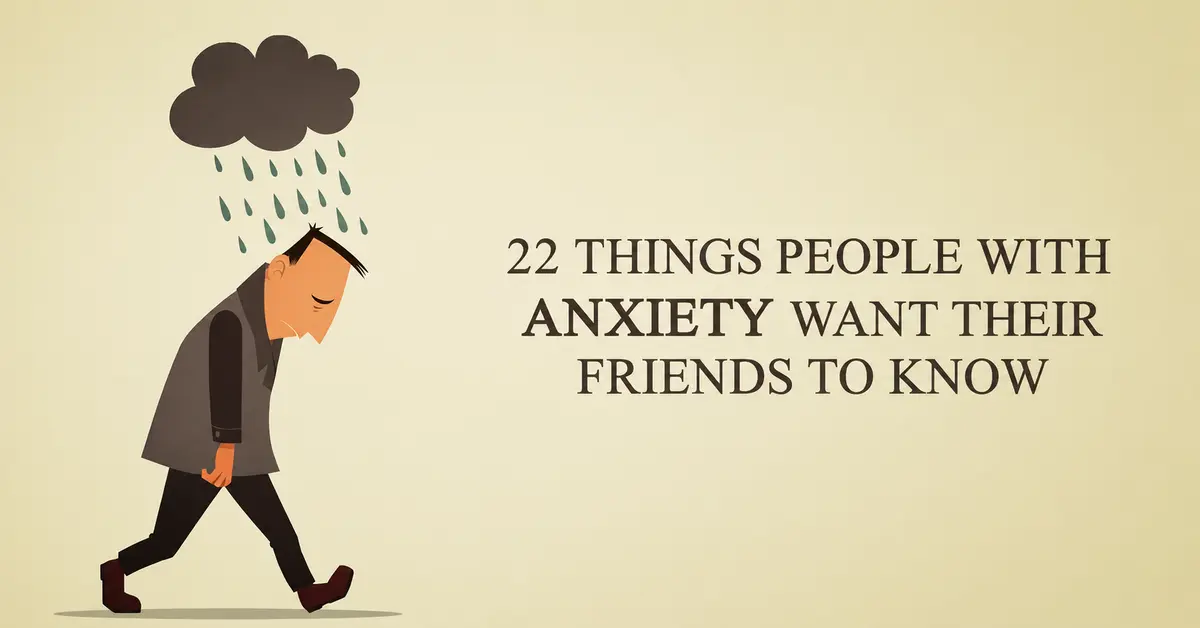
22 Things People With Anxiety Want Their Friends to Know
If you have a friend with anxiety, you have probably experienced moments that felt confusing, stressful, or even frustrating. Messages may go unanswered. Invitations may be turned down again and again. Plans may fall apart at the last minute. From the outside, it can look like distance, disinterest, or inconsistency.
But anxiety often changes the way a person responds to everyday life. What seems small to someone else can feel overwhelming to them. That does not mean they do not care. In many cases, it means they care deeply, think deeply, and struggle internally far more than they show. Understanding that difference can make a friendship much stronger.
Why friendship can feel complicated when anxiety is involved
Quick answer: Anxiety affects thoughts, emotions, behavior, energy, and social comfort. This can make friendships feel inconsistent on the surface, even when the bond is meaningful underneath. A friend with anxiety usually needs understanding, patience, and gentle support, not pressure or judgment.
Anxiety is not always loud or dramatic. It does not always look like a panic attack. Sometimes it looks like silence, hesitation, irritability, withdrawal, overthinking, or canceled plans. Sometimes it looks like someone wanting connection but not being able to handle it in the moment.
That is why friendships with anxious people can be misunderstood. One person sees avoidance. The other feels overload. One person sees distance. The other feels fear, dread, or complete mental exhaustion. When friends learn to interpret these moments with more compassion, the relationship becomes much easier to navigate.
What people with anxiety want their friends to understand
People with anxiety want their friends to know that their reactions are real, even when they seem irrational. They want patience, steady support, and room to breathe. Most of all, they want to be loved as full people, not reduced to their anxiety.
- Whatever is causing their anxiety may seem irrational to you, but it feels very real to them.
- Anxiety can show up at any moment, and when it does, support matters more than solutions.
- If they do not answer a text or keep declining plans, they are not necessarily blowing you off.
- Making plans can feel hard, and even talking on the phone can feel overwhelming sometimes.
- Patience matters, because anxiety does not always look like a panic attack.
- Sometimes anxiety shows up as frustration, irritability, or shortness, not obvious fear.
- If they seem angry or annoyed, try not to take it personally right away.
- Even in good moments, they may still feel a quiet dread that something could go wrong.
- When they are quiet, it does not always mean they are sad, bored, or upset with you.
- Often their mind is moving so fast that it becomes hard to stay present with everything around them.
- Anxiety is not always easy to explain, even for the person experiencing it.
- They may feel sorry for canceled plans, emotional reactions, or things said when they felt overwhelmed.
- If they isolate themselves, do not assume they do not care about you.
- Keep inviting them, because being included still matters, even if they cannot always say yes.
- Anxiety makes people examine everything, all the time, and that can be exhausting.
- They usually do not need you to fix them. They need love, acceptance, and steadiness.
- Anxiety is not always obvious. You may not know they are struggling unless they tell you.
- If they say they are uncomfortable doing something, do not push the issue.
- Forcing a situation often makes anxiety worse, not better.
- Social interaction can be genuinely difficult, so repeated cancellations do not automatically mean laziness or coldness.
- Phrases like “just get over it” or “you are being silly” are usually painful and unhelpful.
- They are not their anxiety. They are a full, unique person who wants understanding and unconditional care.
Why canceled plans and distance do not always mean rejection
A friend with anxiety may cancel plans, avoid calls, or disappear for a while because they feel overloaded, not because the friendship does not matter. Anxiety can make even simple social decisions feel exhausting, especially on difficult days.
One of the most painful misunderstandings in these friendships is the idea that withdrawal always equals rejection. For a person with anxiety, even a fun outing can feel emotionally expensive. There is the anticipation, the overthinking, the pressure to seem okay, the fear of awkwardness, and the exhaustion that can come after.
This is why continuing to invite them can mean so much. A gentle invitation says, “I still want you around.” A calm follow-up says, “You matter even when you cannot show up.” That kind of consistency builds trust. It removes shame and makes it easier for someone with anxiety to reconnect when they can.
What support actually looks like
Helpful support is calm, respectful, and nonjudgmental. It means listening, validating, checking in, and giving space when needed. It does not mean trying to force change, fix everything, or take their reactions personally.
Support does not have to be dramatic. Often it is very simple. It can be a message saying, “No pressure, just checking in.” It can be flexibility around plans. It can be letting them leave early, say no, or take a break without making them feel guilty. It can also be recognizing their limit when they tell you they have reached it.
People with anxiety often know when they are struggling. What they usually need is not a lecture. It is a safe person. That means someone who does not shame them for feeling too much, needing space, or processing life differently.
What friends should avoid saying or doing
Avoid minimizing, pressuring, or trying to talk someone out of anxiety as if it were a simple choice. Statements that dismiss their experience can make them feel even more alone, guilty, or misunderstood.
Telling someone to “just relax,” “stop overthinking,” or “get over it” usually does not help. These phrases imply that anxiety is a personal failure instead of a real mental and emotional experience. The same goes for pushing them into situations after they have clearly said no.
It is also important not to make everything about yourself. If your friend is distant, irritable, or withdrawn, pause before assuming it is about you. Sometimes it is. Often it is not. Curiosity works better than defensiveness. A simple, kind question can prevent a lot of hurt.
Overthinking is exhausting, even when nobody can see it
Anxiety often means constant analysis. People with anxiety may replay conversations, question wording, search for hidden meaning, and worry about how they came across. This mental loop can continue long after an interaction ends.
Many anxious people revisit conversations again and again. They may analyze the tone, the grammar, the timing, the facial expression, or what was left unsaid. They may worry they sounded rude, awkward, needy, distant, annoying, or strange. This can happen even after a completely normal exchange.
That is why kindness and clarity matter so much. Friends who communicate directly, calmly, and consistently often become deeply valued. Predictability reduces unnecessary stress. Reassurance, when honest, can be surprisingly powerful.
People with anxiety still want connection
Anxiety may interfere with connection, but it does not erase the need for friendship. Many anxious people want closeness very much. They simply struggle with the emotional load that social interaction can bring.
This is an important distinction. A person with anxiety may want to come. They may want to talk. They may want to be there for you. They may simply not be able to do it in the way or at the time you expected. Their nervous system may be saying no even when their heart is saying yes.
That is why compassionate friendship matters. It gives room for imperfection. It makes space for the person behind the symptoms. It remembers that anxiety is something they experience, not the sum of who they are.
Conclusion
Quick answer: People with anxiety want understanding more than judgment and support more than pressure. The strongest friendships are built when both people recognize that anxiety may shape behavior, but it does not define character, care, or the value of the relationship.
If you have a friend with anxiety, the most helpful thing you can do is stay kind, stay patient, and stay open. You do not need perfect words. You do not need to rescue them. You simply need to be someone safe enough that they do not feel they must hide their struggle from you.
And perhaps the most important truth is this: they are not their anxiety. They are a whole person with humor, sensitivity, thoughtfulness, loyalty, and depth. Like everyone else, they want to be accepted, respected, and loved without conditions.

latest video

news via inbox
Nulla turp dis cursus. Integer liberos euismod pretium faucibua