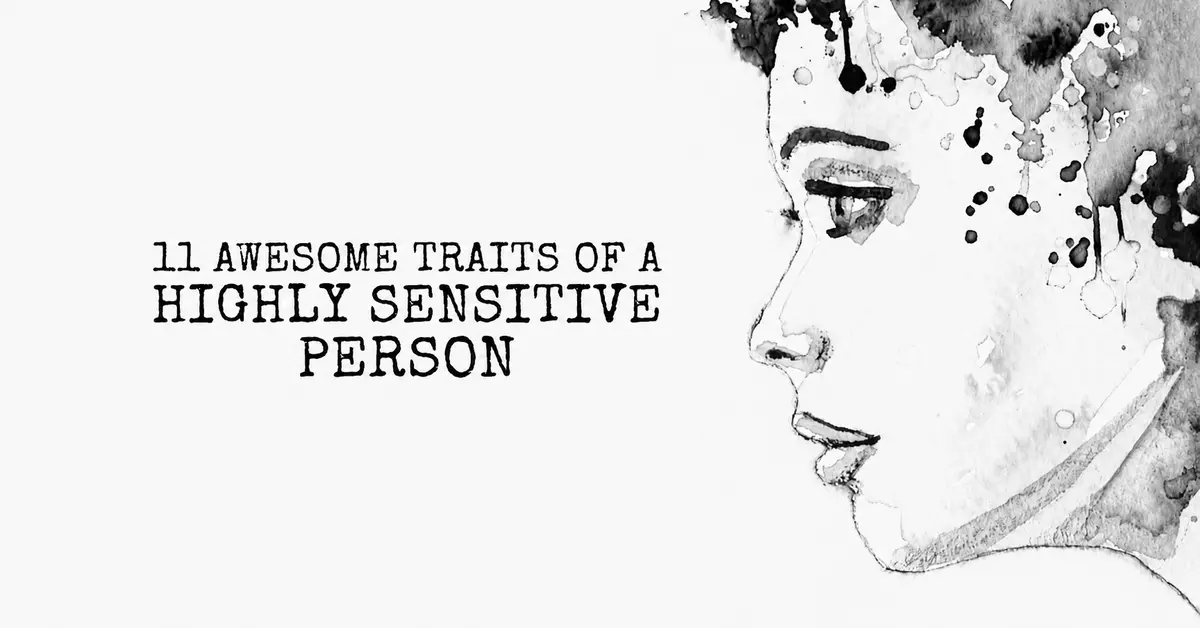
11 Traits of a Highly Sensitive Person
Do you notice details that other people miss?
Do loud noises, bright lights, crowded rooms, strong emotions, or stressful environments affect you more deeply than they seem to affect others?
Have you been told that you are “too sensitive,” “too emotional,” or that you “take things too personally”?
If so, you may relate to the traits of a highly sensitive person.
A highly sensitive person, often called an HSP, is someone with a temperament trait known in research as sensory processing sensitivity. This does not mean someone is weak, fragile, dramatic, or broken. It means their nervous system may process internal and external information more deeply.
Highly sensitive people often notice subtle changes in mood, tone, environment, energy, and emotion. They may feel deeply moved by music, art, nature, kindness, conflict, or suffering. They may also become overwhelmed more easily when there is too much noise, pressure, stimulation, or emotional intensity.
High sensitivity can bring challenges, but it can also be a profound strength.
Here are 11 traits of a highly sensitive person and why these qualities deserve to be understood, not dismissed.
1. A Highly Sensitive Person Processes Things Deeply
One of the clearest traits of a highly sensitive person is deep processing.
HSPs often think carefully before making decisions, responding to conflict, or forming opinions. They may replay conversations, consider different outcomes, notice hidden meanings, and think about how their choices will affect other people.
This can make them thoughtful, responsible, and insightful. It can also make simple decisions feel more complicated than they look from the outside.
A highly sensitive person may spend more time choosing a career path, ending a relationship, making a purchase, or deciding how to respond to a message. Not because they are incapable, but because they see layers that others may overlook.
Deep processing is not the same as overthinking, although the two can overlap. When balanced, it can lead to wisdom, emotional awareness, and careful judgment. When stressed, it can become rumination or analysis paralysis.
The key for HSPs is learning when careful reflection is helping and when it is keeping them stuck.
2. They Are Often Deeply Intuitive
Many highly sensitive people describe themselves as intuitive.
This does not mean they are magical or always right. It means they often notice subtle cues and connect information quickly. They may sense tension in a room, detect when someone’s words do not match their emotions, or recognize patterns before others can explain them.
Their intuition often comes from observation.
A highly sensitive person may notice facial expressions, tone of voice, body language, emotional shifts, and environmental details without consciously trying. Over time, this can create a strong sense of “knowing” when something feels right or wrong.
This trait can be useful in relationships, creative work, caregiving, leadership, teaching, counseling, and problem-solving.
However, intuition still needs balance. HSPs should learn to pair intuition with evidence, communication, and self-awareness. Feeling something strongly does not always mean it is true. But it may be a signal worth exploring.
3. Their Emotional Reactions Can Be Stronger
A highly sensitive person may feel emotions with unusual intensity.
Joy can feel expansive. Beauty can bring tears. Conflict can feel physically painful. Criticism can linger. A kind gesture can be remembered for years. A sad movie, moving song, or painful news story may affect them long after others have moved on.
This emotional depth is often misunderstood.
People may assume HSPs are overreacting when they are actually experiencing a stronger internal response. Their nervous system may register emotional information more vividly, especially in situations involving stress, rejection, injustice, or suffering.
This can be challenging, but it also allows highly sensitive people to be compassionate, emotionally present, and deeply moved by life.
The goal is not for an HSP to feel less. The goal is to learn how to regulate intense feelings without judging themselves for having them.
4. They Are Often Highly Empathetic
Empathy is one of the most powerful traits of a highly sensitive person.
HSPs often pick up on how others feel, sometimes before those feelings are spoken. They may be the person others come to for comfort, advice, or emotional support because they listen carefully and respond with genuine concern.
A highly sensitive person may feel distressed when others are hurting. They may struggle to watch cruelty, unfairness, bullying, or emotional coldness. They may care deeply about animals, children, vulnerable people, or social causes.
This empathy can make them loving friends, partners, parents, coworkers, and caregivers.
But empathy also needs boundaries.
If a highly sensitive person absorbs everyone else’s emotions without rest, they may become exhausted, anxious, or resentful. Compassion is a strength, but it should not require self-abandonment.
Healthy empathy says, “I care about your pain.”
Unhealthy empathy says, “I must carry your pain as if it is mine.”
Learning that difference can change everything for an HSP.
5. They Are Easily Affected by Noise, Crowds, and Stimulation
Highly sensitive people often have a lower threshold for overstimulation.
Loud music, bright lights, crowded spaces, strong smells, chaotic rooms, constant interruptions, or too many demands at once can feel overwhelming. What seems normal to someone else may feel draining or even unbearable to an HSP.
This does not mean they are being difficult. Their nervous system may simply process sensory input more strongly.
Common triggers can include:
- Loud restaurants or parties.
- Open-plan offices.
- Fluorescent lighting.
- Strong perfumes or chemical smells.
- Too many notifications or messages.
- Busy stores or crowded public transport.
- Multiple people talking at once.
A highly sensitive person may need quiet time after a busy day, not because they dislike people, but because their system needs to reset.
Rest is not laziness for an HSP. It is maintenance.
6. They May Be Mistaken for Introverts
Many highly sensitive people are introverts, but not all of them are.
High sensitivity and introversion are different traits. Introversion describes how someone relates to social energy, while high sensitivity describes how deeply someone processes sensory and emotional information.
Some HSPs are outgoing, social, expressive, and energized by meaningful connection. They may enjoy people deeply but still become overstimulated by noise, conflict, crowds, or long periods of activity.
This can confuse others.
An extroverted highly sensitive person may love a party but need a quiet day afterward. They may enjoy meeting people but dislike shallow social pressure. They may be warm and friendly but still require strong boundaries around rest.
Understanding this distinction helps remove shame.
A highly sensitive person does not need to fit neatly into the labels “introvert” or “extrovert.” They simply need to understand what kind of social life helps them feel connected without becoming overwhelmed.
7. They Can Be Excellent Team Members
Highly sensitive people can bring valuable strengths to teams.
Because they often process deeply, notice details, and consider how decisions affect others, they may be thoughtful collaborators. They may identify problems early, sense group tension, remember important details, and contribute carefully considered ideas.
They are often strong in roles that require:
- Careful observation.
- Empathy.
- Creativity.
- Research.
- Listening.
- Quality control.
- Problem-solving.
- Emotional awareness.
However, HSPs may struggle in work environments that are constantly chaotic, competitive, loud, or rushed. They may also find it difficult when decisions have to be made quickly without enough information.
This does not mean they are weak workers. It means their strengths show best in environments that value thoughtfulness, respect, clarity, and psychological safety.
A highly sensitive person can be a powerful contributor when their depth is treated as an asset instead of an inconvenience.
8. They May Be More Vulnerable to Stress, Anxiety, or Burnout
High sensitivity is not a mental health disorder.
However, highly sensitive people may be more affected by stressful or unsupportive environments. Research on sensory processing sensitivity suggests that HSPs can be more responsive to both negative and positive conditions.
This means a harsh, chaotic, critical, or unsafe environment may affect them strongly. But a supportive, calm, encouraging, and emotionally healthy environment may also help them flourish deeply.
Some HSPs are more prone to anxiety, stress, or burnout when they do not have enough downtime, boundaries, emotional support, or control over their environment.
Warning signs of overload may include:
- Feeling emotionally drained.
- Needing to withdraw from everyone.
- Becoming irritable or tearful.
- Struggling to make decisions.
- Feeling physically tense or exhausted.
- Becoming more sensitive to noise or conflict.
The solution is not to toughen up by ignoring sensitivity. The solution is to build a life that respects the nervous system you have.
That may mean better sleep, quieter routines, healthier relationships, therapy, time in nature, boundaries, and regular recovery time.
9. They Often Feel Criticism Deeply
Criticism can hit a highly sensitive person hard.
Even when feedback is useful, an HSP may feel it intensely. They may replay the words later, wonder whether they disappointed someone, or feel embarrassed long after the conversation has ended.
This does not mean they cannot accept feedback. In fact, many highly sensitive people are conscientious and genuinely want to improve. The challenge is that criticism can feel emotionally loud.
Because of this, some HSPs may become people-pleasers. They may try to avoid mistakes, conflict, or disapproval by becoming overly accommodating. Others may become self-critical before anyone else has the chance to criticize them.
A healthier approach is to separate feedback from identity.
Feedback says, “This action can improve.”
Shame says, “Something is wrong with me.”
A highly sensitive person benefits from remembering that correction is not rejection, and imperfection is not failure.
10. They Are Often Conscientious and Well-Mannered
Many highly sensitive people are deeply aware of how their behavior affects others.
They may be careful with their words, thoughtful about timing, attentive to social cues, and concerned about making others feel comfortable. They may apologize when they have hurt someone, remember small preferences, and try hard not to be careless with people’s feelings.
This can make them kind, respectful, and emotionally intelligent.
But conscientiousness can also become exhausting if it turns into constant self-monitoring.
A highly sensitive person may overthink whether they said the wrong thing, seemed rude, disappointed someone, or failed to meet an expectation. They may carry social stress long after the moment has passed.
The strength is consideration.
The challenge is learning that you can be considerate without being responsible for everyone’s reactions.
11. They Often Need Quiet, Meaningful Environments
Environment matters greatly for a highly sensitive person.
Because HSPs are more affected by sensory and emotional input, their surroundings can influence their mood, focus, creativity, and well-being. A noisy, tense, cluttered, or unpredictable environment may drain them quickly. A calm, beautiful, organized, or emotionally safe environment may help them thrive.
This is why some highly sensitive people prefer working from home, having a quiet office, choosing peaceful living spaces, or spending time in nature.
They may feel restored by:
- Soft lighting.
- Quiet rooms.
- Nature walks.
- Calm music.
- Meaningful conversation.
- Creative work.
- Time alone after social events.
- Clear routines and gentle transitions.
A highly sensitive person does not need a perfect environment, but they do need enough peace to recover from stimulation.
Protecting that peace is not selfish. It is healthy self-awareness.
Is Being a Highly Sensitive Person a Weakness?
No.
Being a highly sensitive person is not a weakness. It is a trait with both strengths and challenges.
The strengths may include empathy, intuition, creativity, depth, awareness, careful decision-making, emotional intelligence, and appreciation for beauty. The challenges may include overwhelm, stress, criticism sensitivity, decision fatigue, and difficulty tolerating chaotic environments.
Like any trait, high sensitivity becomes easier to manage when you understand it.
An HSP who tries to live like someone with a completely different nervous system may feel exhausted and ashamed. But an HSP who learns their needs can build a life that supports their strengths.
How to Thrive as a Highly Sensitive Person
If you are a highly sensitive person, you do not need to become less sensitive to live well.
You need better tools.
Try these habits:
- Build recovery time into your schedule. Do not wait until you are overwhelmed to rest.
- Protect your sleep. Sensory and emotional overload often feels worse when you are tired.
- Create calm spaces. Soft lighting, less clutter, and quiet time can help your nervous system reset.
- Practice boundaries. You do not have to absorb everyone’s emotions or solve everyone’s problems.
- Limit unnecessary stimulation. Reduce noise, notifications, and commitments that drain you.
- Use your sensitivity creatively. Writing, art, music, caregiving, research, teaching, and meaningful work may suit your depth.
- Seek support when needed. Therapy or counseling can help if sensitivity is mixed with anxiety, trauma, burnout, or chronic self-doubt.
High sensitivity is easier to carry when you stop treating it like something you need to hide.
Final Thought
A highly sensitive person is not too much.
They are not weak, broken, dramatic, or impossible. They are simply more responsive to the world around them and the world within them.
They feel deeply. They notice carefully. They think thoroughly. They love sincerely. They may need more rest, more quiet, and more emotional safety, but they also bring compassion, insight, and beauty into the lives of others.
Sensitivity is not something to be ashamed of.
When understood and cared for, it can become one of a person’s greatest strengths.

latest video

news via inbox
Nulla turp dis cursus. Integer liberos euismod pretium faucibua